British Shorthair Cat Traits
Cats are the second most popular pet in the UK, after their four-legged foes of course. According to the charity, Covid-19 contributed to this number with 7% of owners saying they got a cat for a reason directly linked to the pandemic, such as being furloughed or generally spending more time at home. In time for International Cat Day today, CasinoTop10.net commissioned research looking at YouGov data, uncovering Top 10 cat breeds in the UK. READ MORE: Pets at Home & Vets4Pets' tips on keeping pets cool in heatwave READ MORE: Most and least beautiful dogs according to maths – how does your pet rank? The online casinos company compiled the list based on how many respondents had a favourable opinion on the cat breed, along with how well known the breed is, using the percentage of the respondents who have actually heard of it. Here’s who came out on top:
Bengal
British Shorthair
Siberian
Ragdoll
European Shorthair
Himalayan
Ragamuffin
Maine Coon
Russian Blue
Cheetoh Cat
Bengal cat
Topping the list is the Bengal. This hybrid of domestic cats inherited its appearance from the Asian leopard cat, which is also where the Bengal part of the name british shorthair behaviour problems

British Shorthair Behaviour Problems
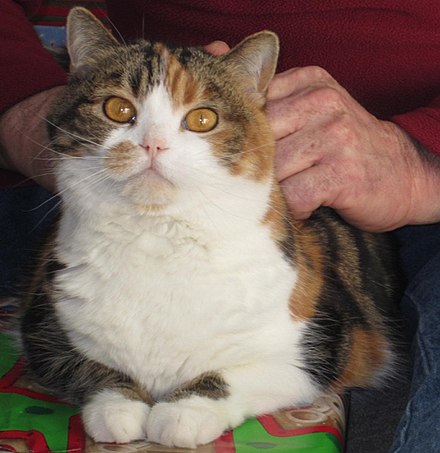
Q: What is your favorite toy? A: I am a mature lady, so most toys don't work for me. However, I do like the flip-flop fish that one of our volunteers gave us. It's awesome! Just wish it had a better battery. It doesn't flip long enough and flops way too soon. Q: What has been your worst experience? A: I know you have heard this many times, but I can't help myself. How does someone decide one day that they don't want you any more? I know stuff happens. I get it. My feline friends get it. But many of us are here because someone decided they didn't have time for us any longer. Well, someone decided that about me so here I am. I have gotten over it, but it hurts. Q: What characteristics are you hoping to find in your new family? A: Well, how about loyalty for starters. I know stuff happens but really, good people, didn't you take an oath to be a faithful and loving family person to your pets? I will ask my shelter people to administer the oath before they send me home. Q: How would you describe yourself? A: I am british shorthair colors
Are British Shorthair Cats Playful
maintenance of low body fat levels is associated with positive outcomes.2,8,9 A similar relationship exists in sports where frontal surface area, power to weight ratio, and/or thermoregulation are important.10 However, in sports demanding high force production, muscle mass may be more closely associated with performance outcomes.1,3 Amongst both junior11–13 and senior heavyweight rowers,14,15 performance is positively correlated with muscle mass and/or absolute body mass. Despite the body mass limits imposed on lightweight rowers (maximal weights of 59 kg (crew average 57 kg) and 72.5 kg (crew average 70 kg) for females and males, respectively), muscle mass remains a determinant of competitive success.6 Comparisons between medallists and non-medallists at world championships suggest that successful lightweight rowers are more mesomorphic, less endomorphic, and tend to have a short sitting height plus longer upper and lower extremities,6 the latter being consistent with findings in heavyweight rowers and offering greater biomechanical efficiency.7 However, these conclusions are derived from data collected during the 1980s, soon after the introduction of the lightweight category to international competition. It is unknown if the relationships still exist given the much higher profile and more competitive environment of lightweight rowing. Thus, our understanding of the association between physique traits and british shorthair cat for sale

British Shorthair Cat For Sale
placing at the 2003 Australian Rowing Championships. Only race results of athletes competing in single sculls were used as sweep events comprise two or more athletes (and thus two or more physiques) in a single boat. For the purpose of this investigation, athletes who qualified for “A” finals were considered successful. Statistical analysis Associations between physique traits and heat times (plus overall placing) were assessed by an analysis of covariance (ANCOVA) with heat times (or final placing) as the dependent variable, gender and category (U23 and OPEN) as categorical predictors, and individual physique traits as a covariate. Differences between athlete categories and variance in physical characteristics between successful (that is, “A” finalists) and less successful athletes (non-finalists) were assessed using a one way analysis of variance (ANOVA). When a significant main effect was observed, a Newman-Keul’s post hoc test was used to locate significant differences between means. Strength of deviations from the phantom were evaluated using z scores as an index of effect size. Operationally defined, a z score⩾0.20 is a small effect, a z score⩾0.50 is a medium effect, and a z score⩾0.80 is a large effect.22 All statistical analyses were undertaken using Statistica software for Windows (version 6.0, british shorthair lifespan

British Shorthair Lifespan
athletes competing in the U23 and OPEN categories, suggesting any performance variance between these groups was related to factors other than physique. Figure 3 Somatotype of male (a) and female (b) lightweight rowers reported over the last two decades and competing in the 1985 World Championships,6 1987 Pan American Games,24 Sydney 2000 Olympics,23 and U23 and OPEN categories of the 2003 Australian Championships (present investigation). Values are means (SD). A short sitting height (relative to stature) and longer limb lengths are characteristic of both lightweight24 and heavyweight rowers,14 conferring greater biomechanical efficiency.10 These structural traits were evident amongst athletes in the present investigation, as inferred via small sitting height to stature ratios and large arm length to stature ratios.10 In spite of this, competitive success was not strongly associated with these physique traits. Perhaps this is because of the homogeneity of physique traits amongst the present lightweight rowers, as indicated by low SAM scores, a measure of the average dispersion of individual somatotypes from the group mean.19 In view of the known influence of physiological variables and skill levels on rowing performance,25 the identification of very strong relationships between a wide array of anthropometric characteristics alone and competitive success would.

British Shorthair Colors
lightweight rowers competing in the 2003 Australian Rowing Championships for their cooperation. Special thanks also to Hamilton Lee, Marc Quod, Camilla Mather, Roberto Solano, Michelle Edwards, and Sally Wright from the Department of Physiology, Australian Institute of Sport, for their assistance with data collection. REFERENCES
↵
Olds T. The evolution of physique in male rugby union players in the twentieth century. J Sports Sci2001;19:253–62.
↵
Claessens AL, Lefevre J, Beunen G, et al. The contribution of anthropometric characteristics to performance scores in elite female gymnasts. J Sports Med Phys Fitness 1999;39:355–60.
↵
Siders WA, Lukaski HC, Bolonchuk WW. Relationships among swimming performance, body composition and somatotype in competitive collegiate swimmers. J Sports Med Phys Fitness1993;33:166–71.
↵
Claessens AL, Hlatky S, Lefevre J, et al. The role of anthropometric characteristics in modern pentathlon performance in female athletes. J Sports Sci 1994;12:391–401.
↵
White AT, Johnson SC. Physiological comparison of international, national and regional alpine skiers. Int J Sports Med1991;12:374–8.
↵
Rodriguez FA. Physical structure of international lightweight rowers. In: Reilly T, Watkins J, Borms J, eds. Kinanthropometry III. London: E and FN Spon, 1986:255–61.
↵
Shephard RJ. Science.
Comments
Post a Comment